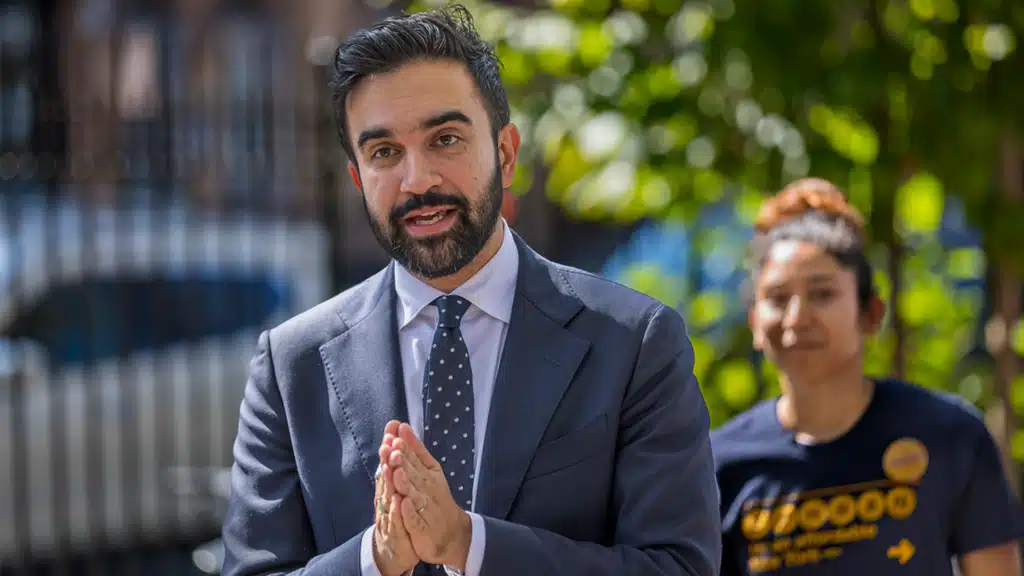
New York City Mayor-elect Zohran Mamdani’s push to replace police officers with social workers on 911 calls is drawing sharp criticism, and the evidence continues to mount that the experiment will fail—just as skeptics predicted, according to the New York Post. Despite his insistence that dispatchers and social workers possess sufficient expertise and insight to handle volatile emergencies, real-world data shows the so-called “reform” is anything but effective.
New York City’s Behavioral Health Emergency Assistance Response Division (B-HEARD)—the pilot program upon which Mamdani models his proposal—has proven incapable of safely managing the reality of emergency mental health calls. According to The Post, roughly 60% of the calls screened are immediately deemed “ineligible” for a social worker response, and more than 35% of eligible calls from mental health professionals received no response.
Mamdani’s Department of Community Safety (DCS) proposal has strained relations with law enforcement, with critics arguing that it could expose potential callers to danger and put responders at risk. Critics question how Mamdani expects to improve public safety by replacing trained police officers with civilians who lack both tactical training and authority. Retired NYPD officers and policy experts are calling the plan “dangerous,” warning it will only complicate police work and potentially endanger every party involved: victims, dispatchers, and the very social workers being deployed into unpredictable situations. The reality of domestic violence calls challenges the notion that “crisis teams” or “mental health experts” are equipped for rapidly evolving incidents.
Political strategist Hank Sheinkopf dismissed the proposal for a new department altogether. “Exactly what New York doesn’t need: another government agency with an unmanageable bureaucracy. Domestic dispute calls can get violent,” Sheinkopf said.
According to The Post, “the pricey project would utilize $605 million by absorbing existing programs like B-HEARD, and seek to raise a whopping $455 million in new funding.”
Mamdani’s approach is being challenged not only by data but by the lived experiences of those tasked with keeping the city safe. The evidence suggests that politics and wishful thinking have trumped genuine concern for effective emergency response, leaving some skeptical of the program.